First-Party Data in UA — What It Actually Means Beyond the Buzzword

First-Party Data in UA — What It Actually Means Beyond the Buzzword

First-party data has become one of the biggest buzzwords in UA.

Every conference panel mentions it. Every vendor deck has a slide on it. Every platform claims to help you “unlock” it.

And most teams are still responding the same way: “Yeah, we collect it.” “Yeah, we use it for retargeting.” “Yeah, we’re compliant.

That’s not a first-party data strategy. That’s storage.

So let’s strip away the buzzword and talk about what first-party data actually means in modern UA — and why it’s quickly becoming the foundation of scalable growth.

What first-party data actually is

At its core, it’s the data you collect directly from your own product ecosystem.

Not bought. Not rented. Not inferred from external brokers. Owned.

In mobile UA, that includes in-app events, session behaviour, purchase history, feature usage, retention milestones, onboarding completion, subscription activity, and CRM data.

If your app is the source, it’s first-party.

But here’s where most conversations stop too early — because the value isn’t in having the data. The value is in what the data allows you to do.

Why UA teams are suddenly obsessed with it

It’s not hype. It’s survival.

Privacy shifts like ATT and SKAN have cost teams full user-level tracking, clean attribution paths, reliable remarketing signals, and platform transparency.

The shift away from third-party data isn’t coming. It’s here.

So what’s left? The data you control.

And that’s where first-party data stops being an analytics layer — and becomes a performance layer.

The real shift: from attribution to intelligence

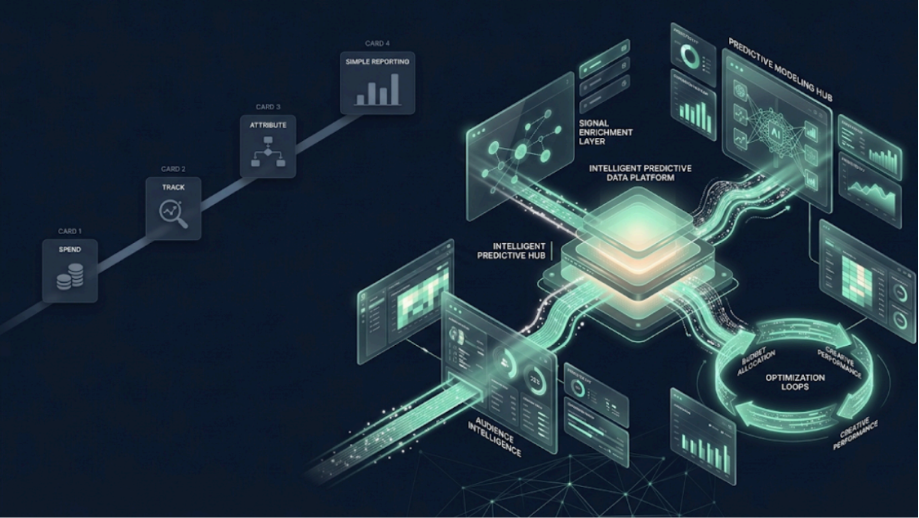
Old UA looked like this: Spend → Track → Attribute → Optimise

New UA looks like this: Capture signals → Enrich → Model → Predict → Optimise

The difference? You’re no longer reacting to platform reports. You’re building your own version of truth — and using platforms like Meta, Google, and AppLovin as execution layers, not decision-makers.

What it looks like when it's actually working

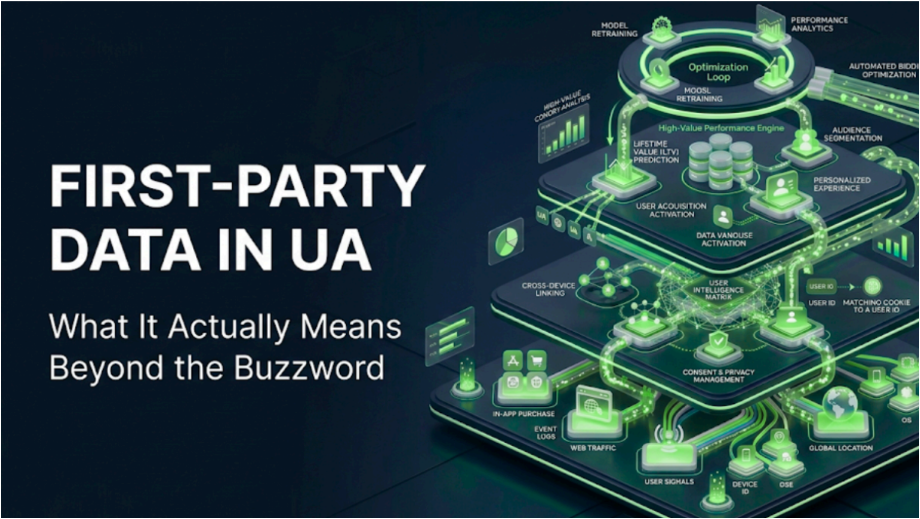
The best teams don’t just collect first-party data. They structure it like a system.

Signal layer — what users actually do. Install, signup, trial start, purchase, drop-off. Most teams have this. Most teams stop here.

Identity layer — connecting fragmented journeys. Email, login IDs, device stitching, CRM linking. Without this, you have events without context.

Value layer — because not all users are equal. LTV prediction, cohort behaviour, purchase velocity, retention probability. This is where you stop optimising for users and start optimising for the right users.

Feedback loop — where most teams fail. First-party data has to go back into creative optimisation, bid strategy, audience definition, and budget allocation. If it doesn’t loop back into spend decisions, it’s reporting — not performance.

The mistake most teams make

They treat first-party data as a post-install tool.

The real power is pre-decision.

Instead of asking: “This campaign got installs at $X CPI” — the right question is: “What type of users did this campaign bring in, and how should that change where we scale next?”

That’s the shift from campaign thinking to cohort thinking.

And you can already see the gaps:

Retention signals that hit Day 7 but never become retargeting inputs. LTV data sitting in a BI tool while campaigns optimise for installs. Lookalike audiences built on all users — instead of the top 10% cohort that would almost always outperform.

The data to fix all of this already exists. It’s just not plugged in.

The attribution piece people miss

First-party data doesn’t operate in isolation.

If your MMP isn’t correctly mapping events back to campaigns — or your event taxonomy is inconsistent — your first-party data becomes noisy before it even gets used.

Data hygiene isn’t just an analytics problem. It’s a performance problem.

The Appflix perspective

At Appflix, we don’t see first-party data as a reporting feature or a privacy workaround.

We see it as infrastructure.

It powers smarter creative iteration, better platform feeding, budget confidence, and reduced dependency on platform-reported truth.

Because in modern UA, growth is no longer just about buying users cheaper. It’s about understanding which users are actually valuable — and building systems that help platforms find more of them.

Where this is heading

The winners won’t be the ones with the most data.

They’ll be the ones who turn data into decisions the fastest.

First-party data isn’t a buzzword. It’s the shift from reactive UA to intelligent UA — and the gap between “we collect data” and “we drive growth from data” is exactly where the next wave of UA winners will be decided.

Most teams are still leaving it on the table.

At Appflix, we help performance marketers bridge that gap — between the data they already have and the growth it can drive.

Related Blogs

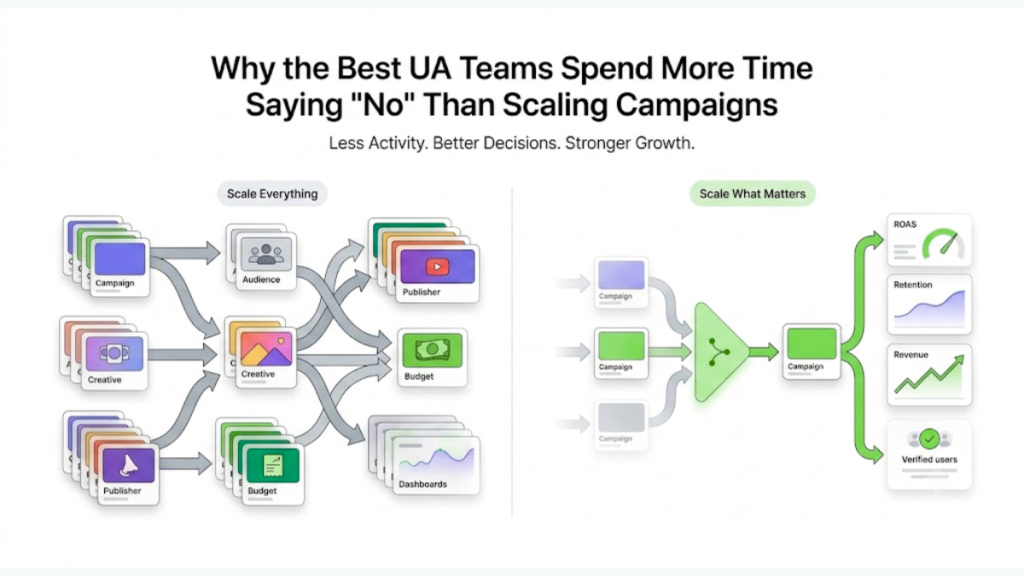
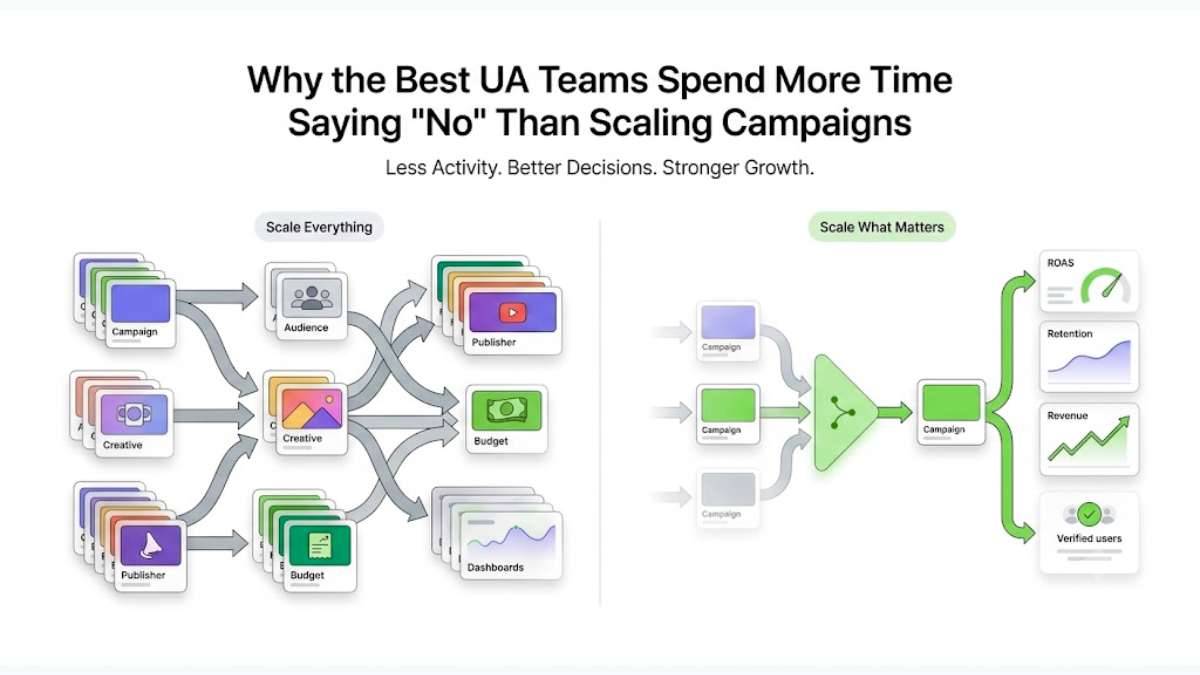
Why the Best UA Teams Spend More Time Saying “No” Than Scaling Campaigns

For years, User Acquisition revolved around one question: How fast can we scale? Bigger budgets. More geographies. More creatives. More installs. Growth meant doing more. But in 2026, the best UA teams are asking a different question:

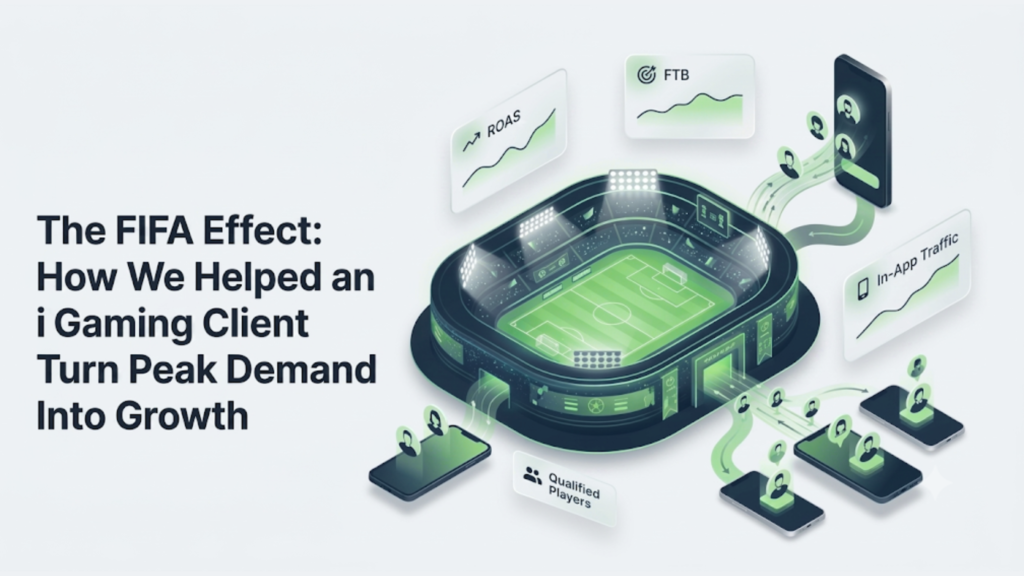
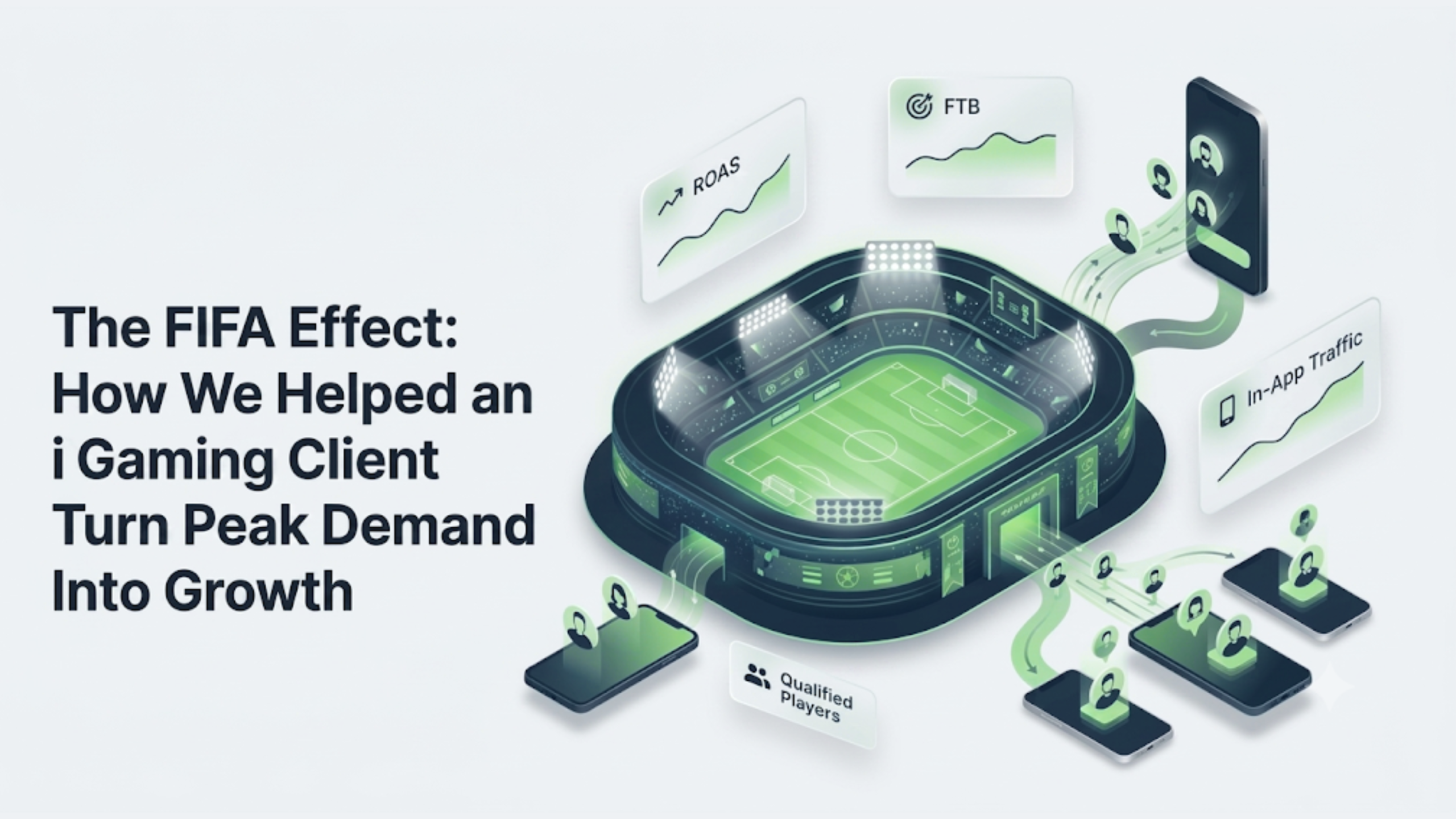
The FIFA Effect: How We Helped an iGaming Client Turn Peak Demand Into Growth

Every major tournament creates the same paradox for iGaming marketers.

First-Party Data in UA — What It Actually Means Beyond the Buzzword

First-party data has become one of the biggest buzzwords in UA.
APPSHEPHERD

Protect Every Install.

Always-on fraud protection designed to keep your traffic clean and attribution accurate.