



The AppLovin Problem: What Happens When One Platform Dominates Your Entire UA Stack

The AppLovin Problem: What Happens When One Platform Dominates Your Entire UA Stack

There’s a version of this that sounds like a win.

CPIs down. ROAS up. The algorithm is doing its thing. Your team has breathing room. You found a platform that works, scaled hard, and now it’s running the show.

Then one quarter, something shifts.

CPIs spike. Performance softens. The algo stops behaving the way it used to.

And suddenly you realize you don’t have a UA strategy — you have a single dependency.

That’s the risk of platform concentration. And AppLovin is probably the clearest example of this shift right now.


How We Got Here

AppLovin’s rise made sense. Strong ML. Massive inventory. Fast scaling. For a lot of apps — especially gaming — it became the fastest path to hitting growth targets.

UA teams followed the performance. Budgets followed UA teams. And slowly, a significant chunk of mobile acquisition spend consolidated into one ecosystem.

This isn’t a dig at AppLovin. Platforms become dominant because they work. The problem isn’t using them. The problem is what happens to your growth strategy when one platform becomes your entire growth strategy.

The Hidden Risks Nobody Talks About When It's Going Well

The Hidden Risks Nobody Talks About When It's Going Well

Your visibility becomes limited

AppLovin’s ecosystem is largely self-attributing. The signals powering the algorithm — conversion events, LTV proxies, audience data — largely live inside the platform ecosystem. External measurement tools typically have less visibility than the platform itself.

Incrementality becomes harder to validate. Teams can gradually become more reliant on platform-reported ROAS when independent validation frameworks aren’t mature.

Your creative thinking narrows

Creatives get optimized for one algorithm, one audience pattern, one delivery system.

Over time, teams stop building broadly scalable creative systems and start building platform-native ads only.

Creative fatigue hits faster. Cross-platform adaptability quietly erodes.

Your negotiating leverage weakens

When one platform drives the majority of your installs, the relationship dynamic shifts.

Pricing dynamics change. Efficiency becomes harder to maintain at scale. You don’t always notice until you’re already deeply dependent on the ecosystem.

Platform volatility becomes a business risk

Every platform changes — algorithms evolve, auction dynamics shift, policies update.

If the majority of your growth runs through one source, even a moderate platform shift can impact revenue forecasts, scaling plans, and cash flow.

That’s not a UA problem anymore.

That’s an operational one.

The "But It's Working" Trap

The hardest part of this conversation is that it usually happens when things are going fine.

Teams scaling profitably on AppLovin don’t want to hear about diversification. Why add complexity to something that’s delivering? Why invest time in Meta or programmatic if AppLovin is already doing the job?

Short-term, that’s rational.

Long-term, it’s how concentration risk compounds silently.

The teams that get caught flat-footed usually didn’t make a bad bet.

They made a good bet, kept doubling down, and never re-evaluated the dependency as the ecosystem shifted around them.

What Smart UA Teams Are Actually Doing

Diversification in UA doesn’t mean spreading thin across every channel.

It’s about building optionality — so you’re never one platform decision away from a growth crisis.

Diversification doesn’t mean reducing spend on winning channels. It means ensuring your growth engine still functions if market conditions change.

In practice, that looks like:

  • Keeping other channels warm — even at lower spend. A Meta or programmatic campaign at $500/day is infinitely easier to scale than rebuilding from scratch when you actually need it.
  • Running real incrementality tests — not just trusting reported ROAS. Holdout testing and MMM frameworks exist for exactly this reason.
  • Building channel-agnostic creatives — that perform across rewarded video, social feeds, programmatic placements, and OEM inventory. Creative breadth is a competitive moat.
  • Creating internal concentration guardrails — if any single channel starts dominating total UA spend, that should trigger a review. Not a panic. A review.

The Bigger Shift Happening Right Now

There’s a larger conversation underneath all of this.

As automation becomes dominant and algorithms make more decisions, UA teams are losing visibility into how optimization actually happens.

That’s the trade-off of handing control to a black box — efficiency up, understanding down.

The teams that will outperform in the next few years aren’t just the ones chasing scale.

They’re the ones who understand that in modern mobile advertising, control is becoming just as valuable as scale.

Three Questions Worth Asking Yourself Right Now

Three Questions Worth Asking Yourself Right Now

→ If AppLovin’s performance dropped 30% tomorrow, what’s your 30-day plan?

→ Do you know your true incrementality by channel — or are you relying primarily on platform-reported ROAS?

→ When did your team last run a meaningful test on a channel outside your core stack?

These aren’t gotcha questions.

They’re the ones that separate reactive UA from resilient UA.

AppLovin isn’t the problem.

Over-concentration is.

And in an industry where one algorithm update can reshape your entire acquisition curve overnight, resilience isn’t a nice-to-have.

In modern UA, resilience is no longer a defensive strategy.

It’s a growth strategy.

At Appflix, we work with UA teams navigating exactly this challenge — multi-channel growth, incrementality measurement, and reducing dependency on any single acquisition source.

Related Blogs

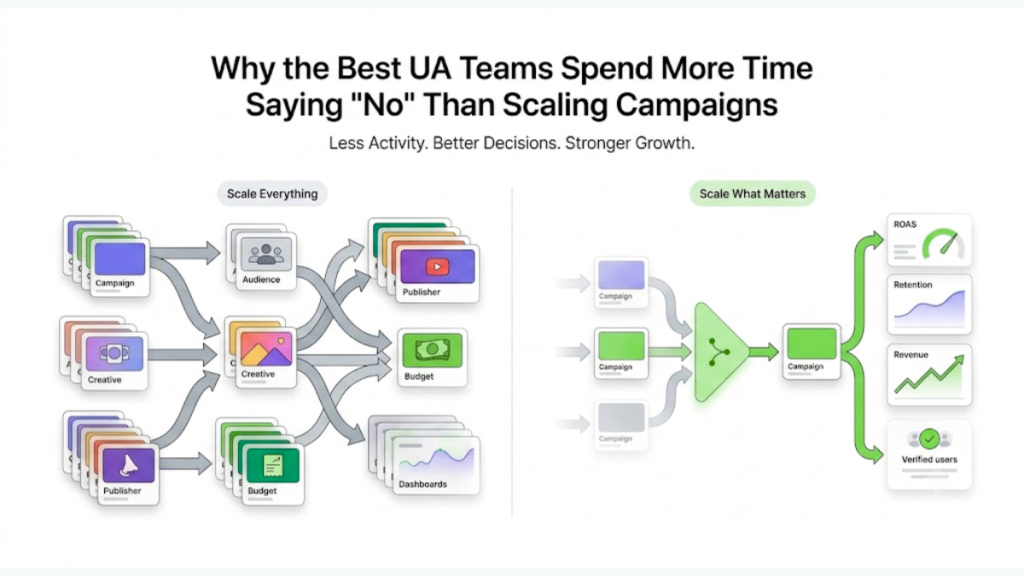
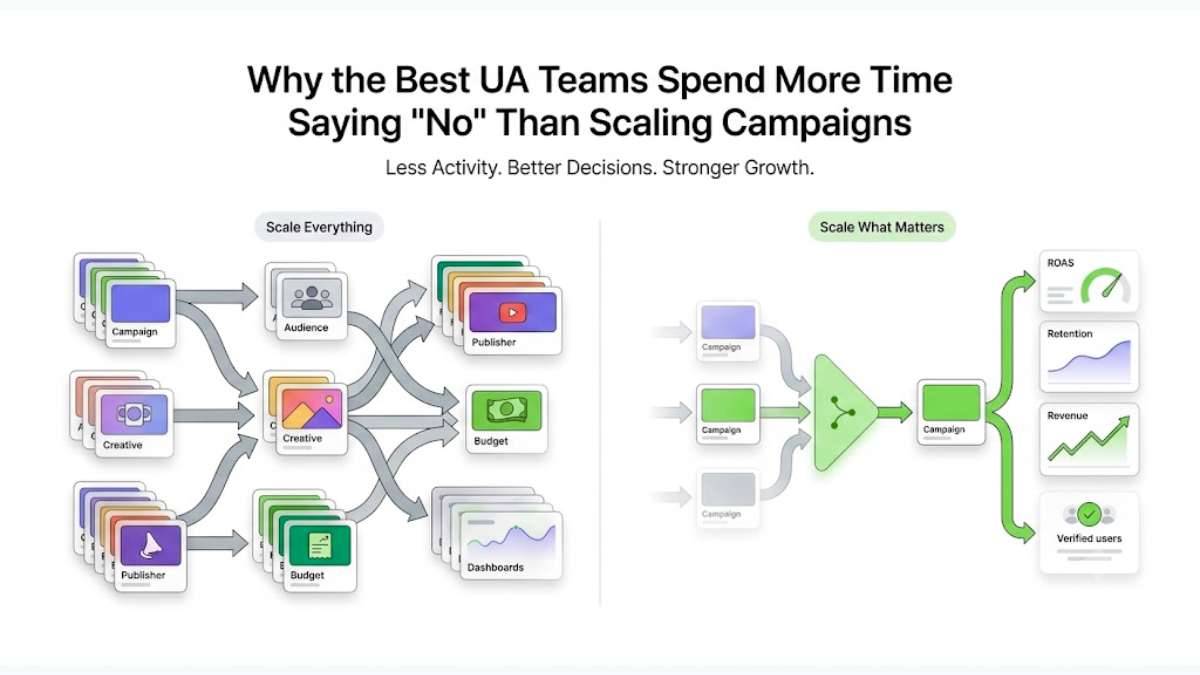
Why the Best UA Teams Spend More Time Saying “No” Than Scaling Campaigns

For years, User Acquisition revolved around one question: How fast can we scale? Bigger budgets. More geographies. More creatives. More installs. Growth meant doing more. But in 2026, the best UA teams are asking a different question:

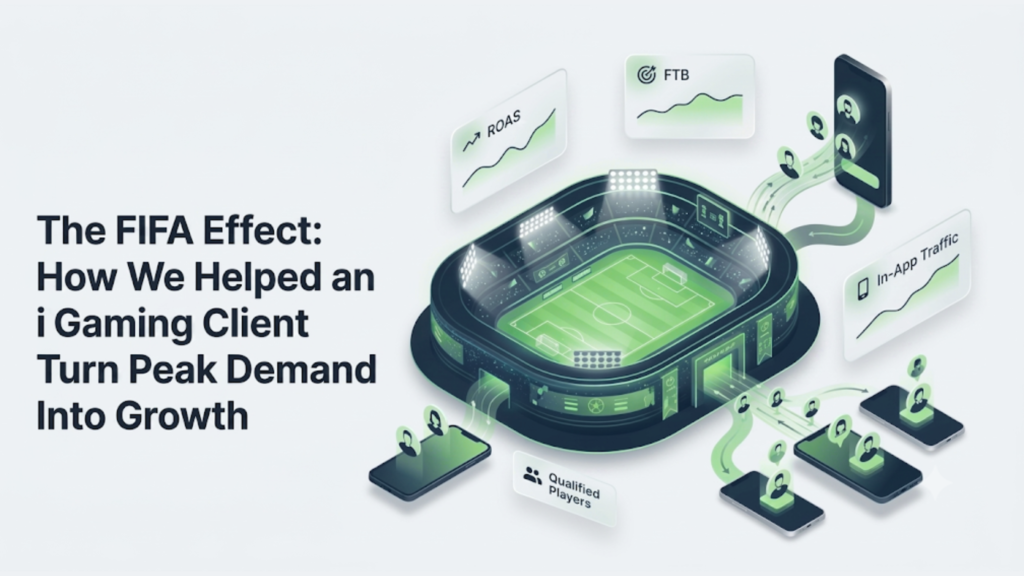
The FIFA Effect: How We Helped an iGaming Client Turn Peak Demand Into Growth

Every major tournament creates the same paradox for iGaming marketers.

First-Party Data in UA — What It Actually Means Beyond the Buzzword

First-party data has become one of the biggest buzzwords in UA.
APPSHEPHERD

Protect Every Install.

Always-on fraud protection designed to keep your traffic clean and attribution accurate.