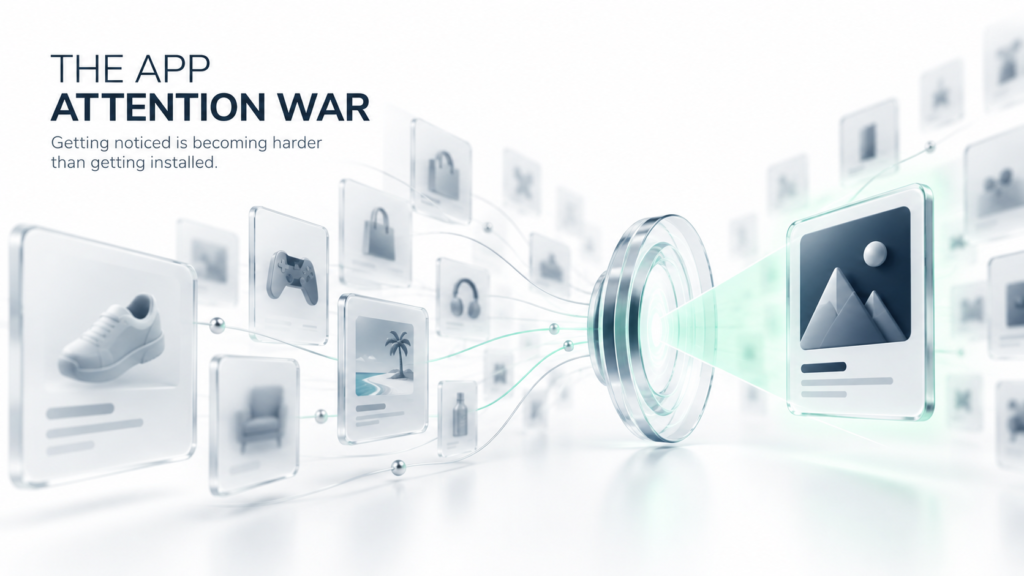
The App Attention War: Why Getting Noticed Is Becoming Harder Than Getting Installed

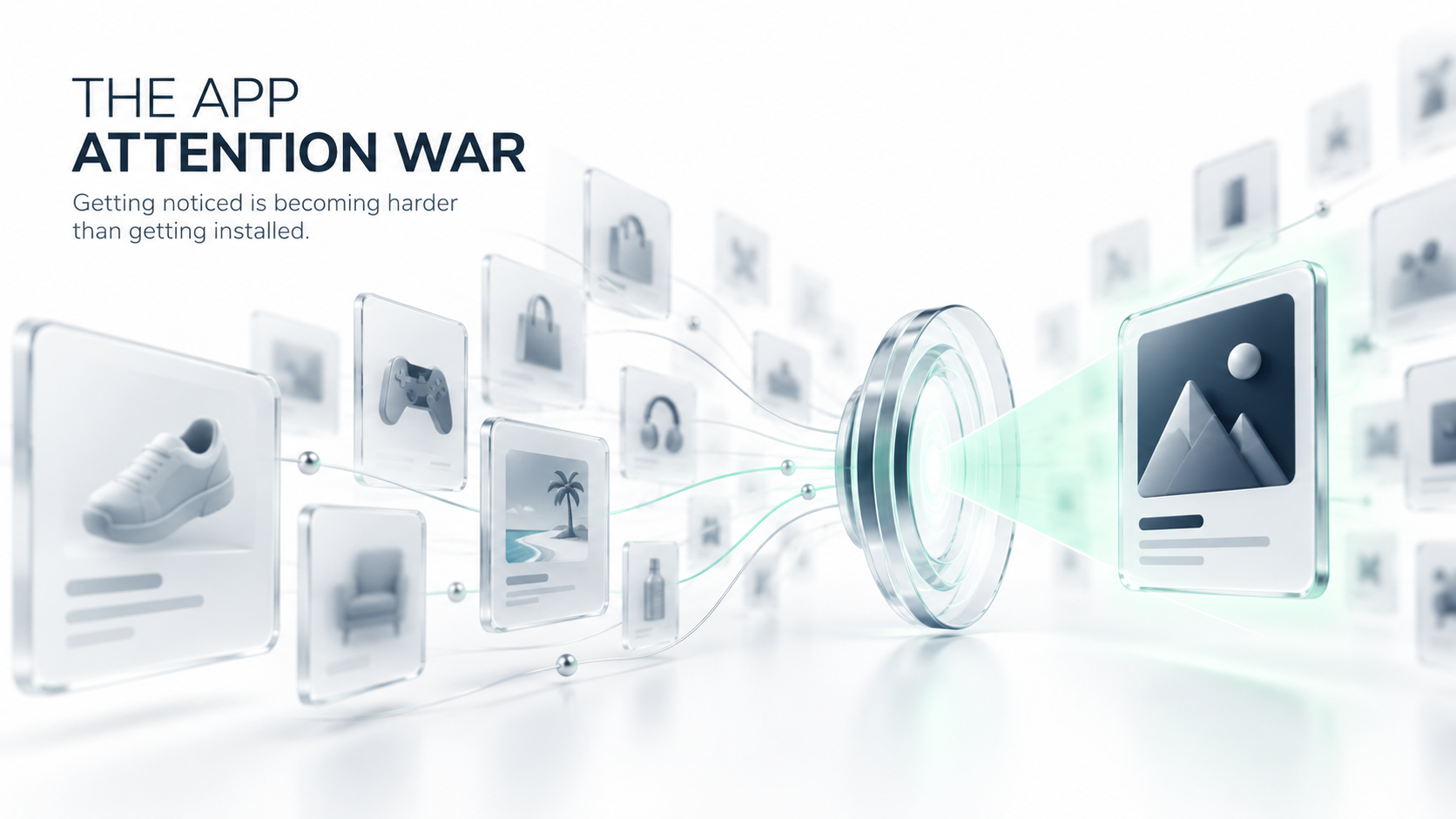
The App Attention War: Why Getting Noticed Is Becoming Harder Than Getting Installed

There was a time when the install was the hard part.

Right audience. Right ad. They clicked. They installed.

Job done.

Not anymore.

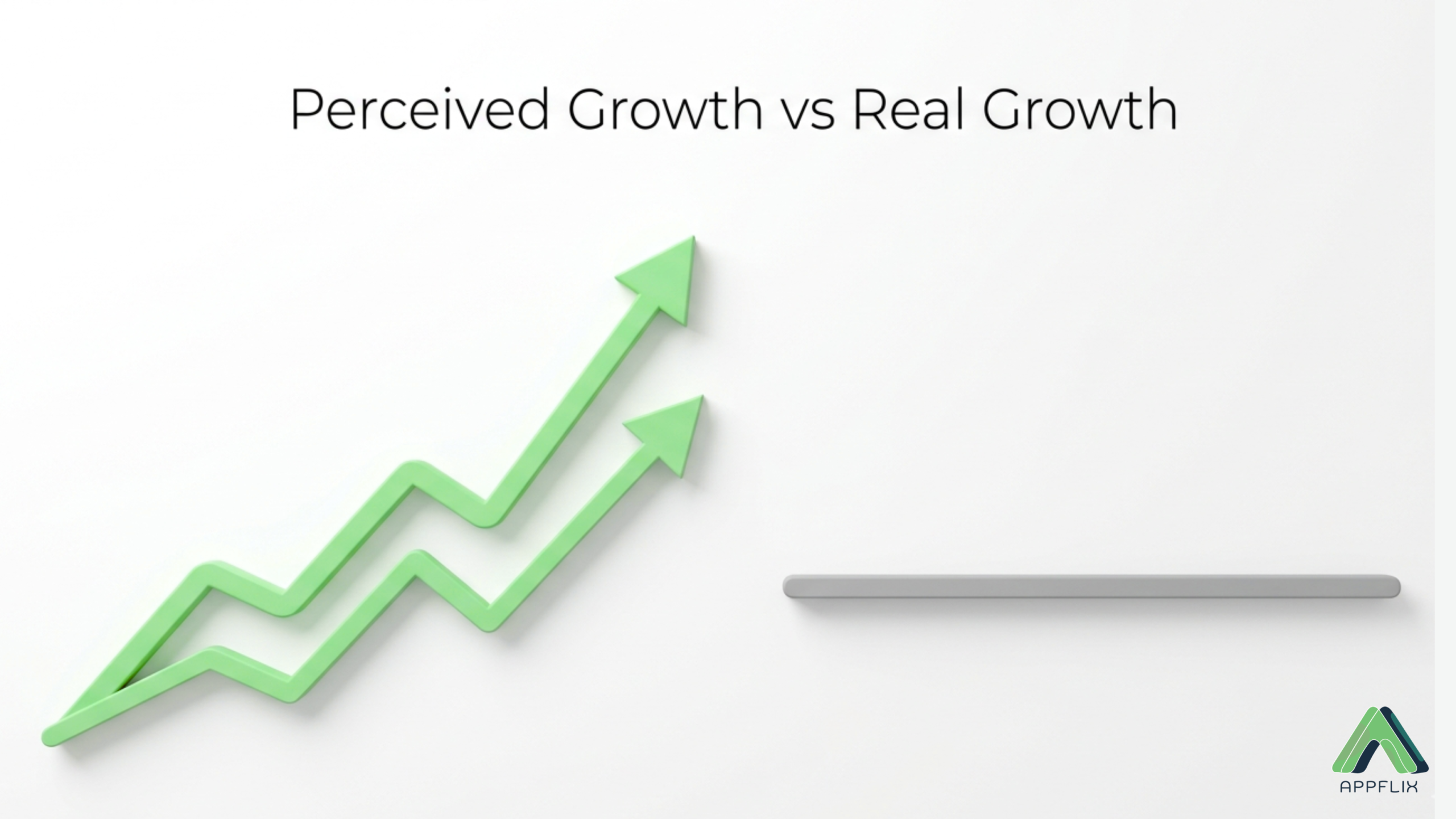
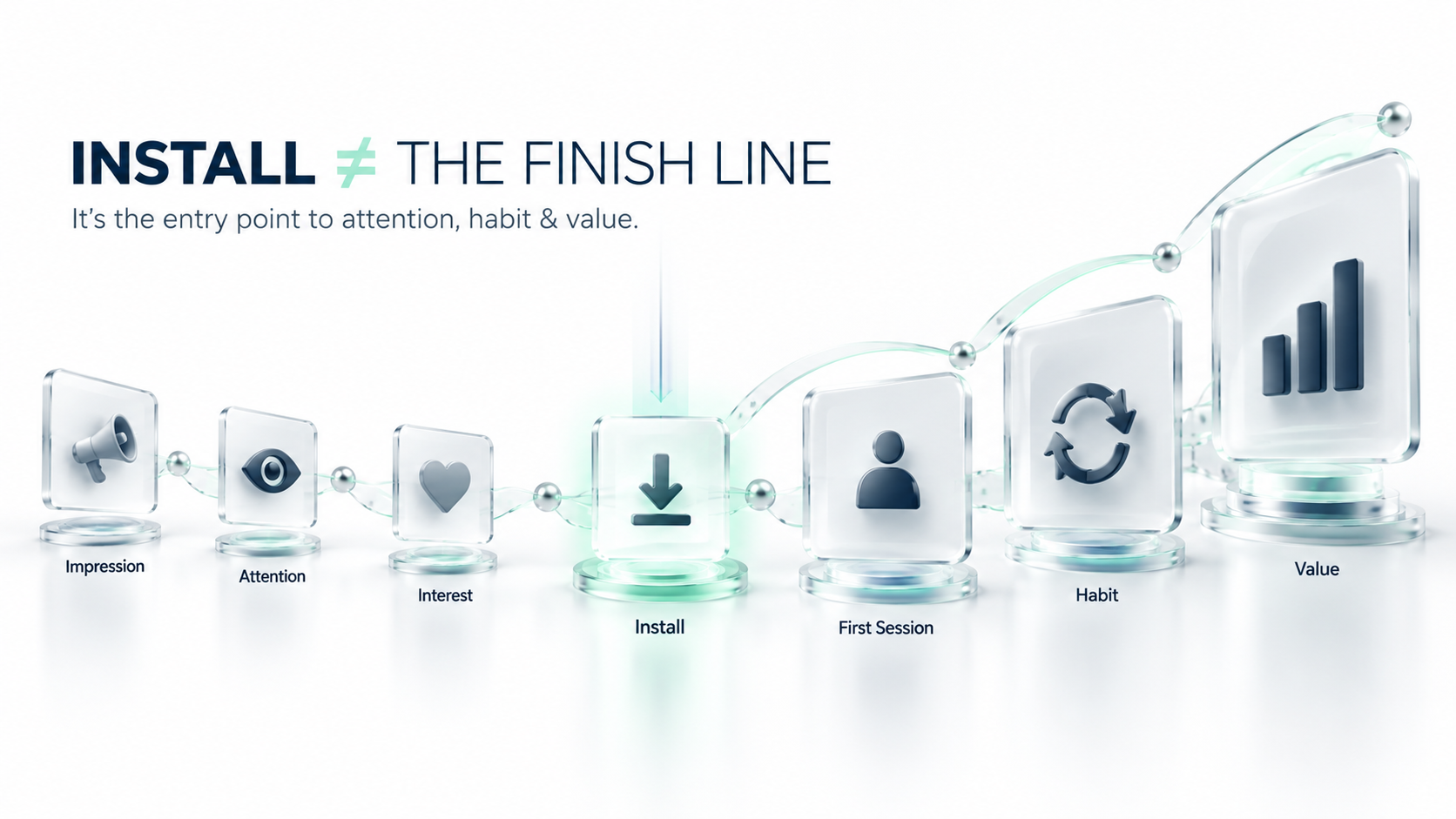
The install is increasingly the middle of the story, not the finish line — because every user is surrounded by apps competing for the same scarce resource.

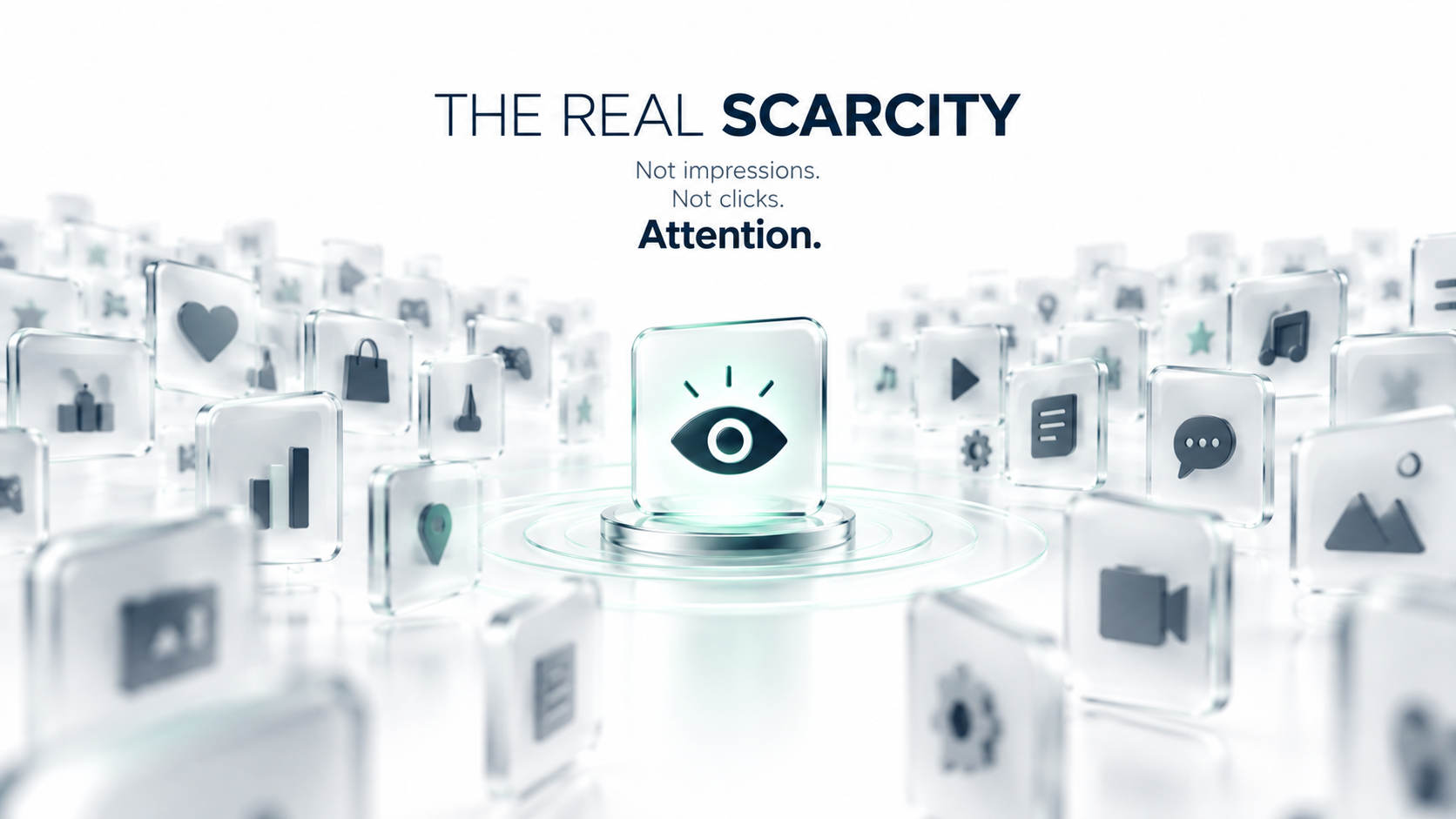
Not impressions.
Not clicks.

Attention.

The battlefield moved before the click

A user can scroll past your creative in half a second, skip your video, open your app once and never come back — while your campaign is still optimizing toward the install you thought was the goal.

That changes the real question.

Not “How do we get more installs?”

But:

“Why should this user give us their attention?”

An install can be bought. Attention has to be earned.

An install can be bought. Attention has to be earned.

Two apps can post the same CPI on the same day and still have completely different futures.

One becomes a habit.

The other gets deleted the next time storage runs low.

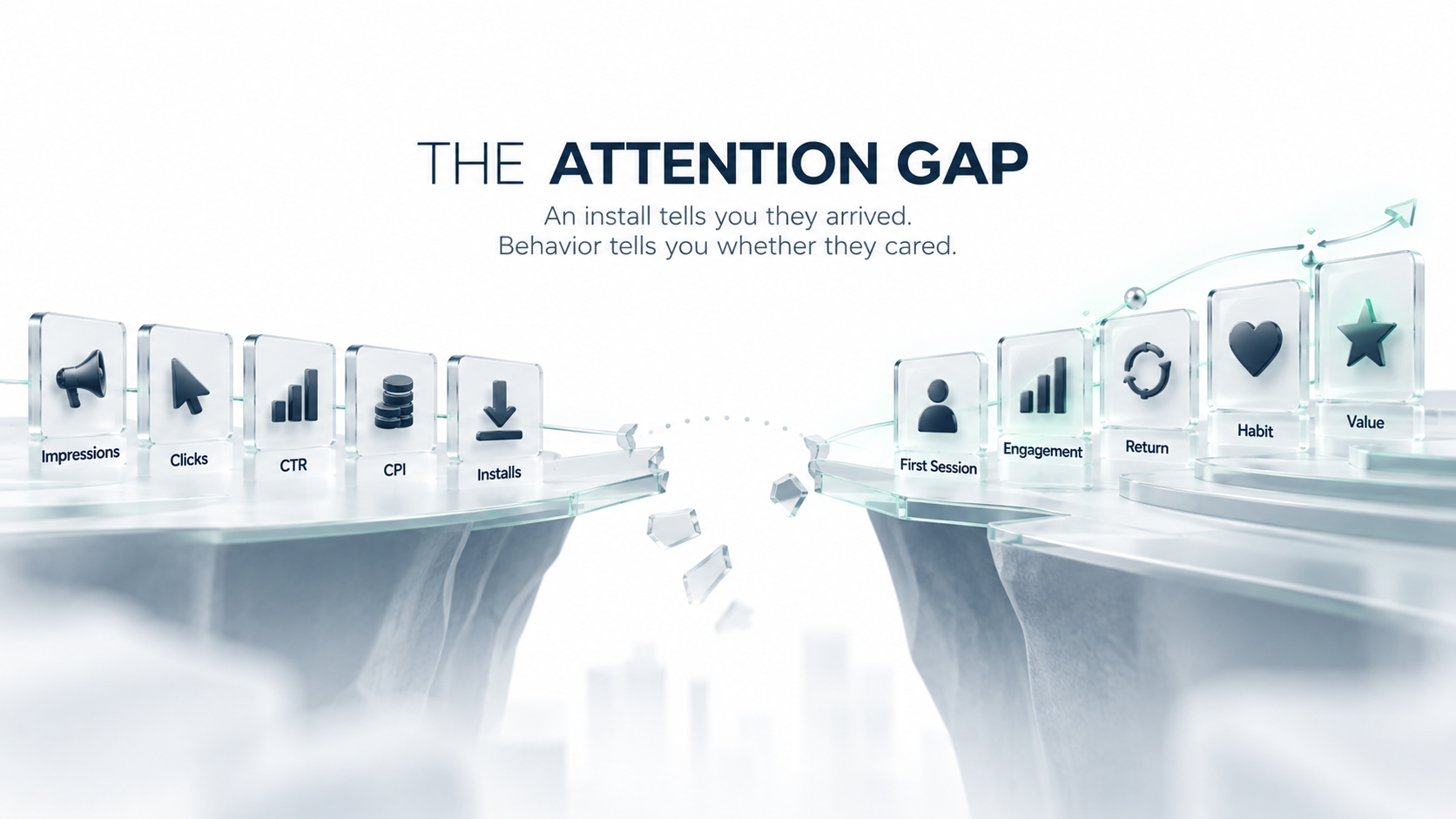
The funnel most dashboards report on:

Impression → Install

The funnel that actually decides outcomes:

Impression → Attention → Interest → Install → First Session → Habit → Value

Most UA reporting still treats the install as the finish line.

It’s the first test — and increasingly, the easiest one to pass.

The install was never the goal.

It was the entry fee to compete for something much harder to earn.

Where the attention gap actually shows up

Where the attention gap actually shows up

This isn’t abstract. It shows up in the numbers UA teams already track, if they’re honest about reading them.

  • Creative fatigue used to feel like a multi-week curve. In feed-native environments, it’s increasingly measured in days.
  • Post-install events tell a brutal story. A user who opens once and never triggers a second session isn’t necessarily a retention problem. There was nothing to retain. It’s an attention problem that happened right when you thought you’d won.
  • SKAN and MMP data can confirm that the install happened and still tell you very little about whether the user actually cared.
  • A cheaper CPI isn’t automatically a better one. A higher CTR isn’t automatically better creative — not if neither survives contact with the first session.

The uncomfortable part?

We already have most of the signals.

We’re just not always treating them as signals of attention.

Creative's job just got bigger

Creative used to be a campaign asset:

Make it.
Test it.
Kill the losers.
Scale the winners.

Now it has to do more.

It has to stop the scroll, signal relevance, and leave a mental bookmark — all in under a second.

“I’ve seen this before.”

“That’s for someone like me.”

“I want to know more.”

The winning creative isn’t necessarily the loudest.

When every ad shouts louder, volume stops being differentiation.

Sometimes the ad that wins is the one that doesn’t try as hard:

One sharp idea.
One recognizable problem.
One clear reason to care.

Because in an increasingly crowded feed, clarity itself can become a competitive advantage.

What this changes on the scorecard

The best UA teams won’t stop tracking CPI, ROAS, or the IAP/IAA mix.

They’ll stop treating those metrics as the whole story.

They’ll start asking harder questions alongside them:

Did the creative set the right expectation?

Did the first session deliver on it?

Did the user come back when nothing was forcing them to?

Did post-ATT and ATT-consented cohorts behave differently — and do we understand why?

A campaign with a mediocre CPI and a strong day-one engagement curve can be doing something a cheap-install, zero-engagement campaign never will.

The problem is that most attribution stacks weren’t built to make that distinction obvious.

The teams that win this decade won’t wait for the dashboard to tell them what matters.

They’ll build scorecards around it.
The real scarcity

The real scarcity

There are millions of apps competing for downloads.

Users don’t have millions of available mental slots for them.

That’s the real attention war.

Not who can generate the most impressions.

Not who can produce the cheapest install.

Not even who can win the click.

It’s who can become worth noticing — and worth remembering.

The next UA advantage may not be better targeting.

It may simply be becoming harder to ignore.

Where’s your team feeling this most — the first session, the creative fatigue curve, or somewhere in attribution? Curious how others are catching it.

Related Blogs

The App Attention War: Why Getting Noticed Is Becoming Harder Than Getting Installed

There was a time when the install was the hard part. Right audience. Right ad. They clicked. They installed. Job done. Not anymore.

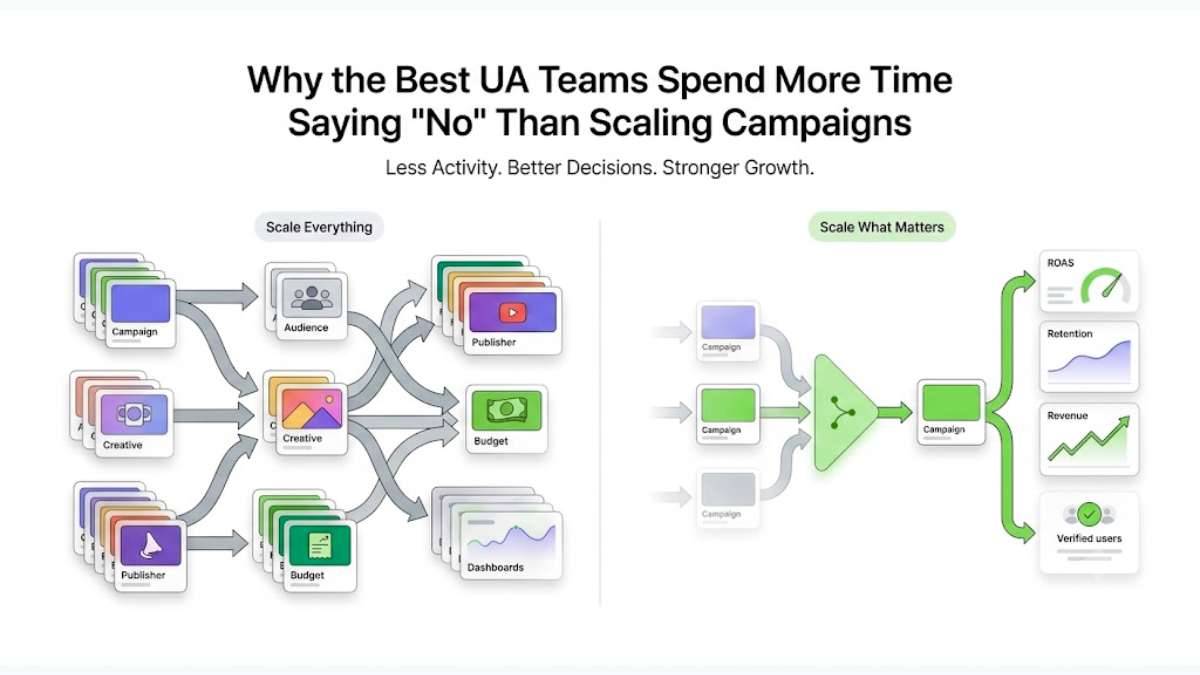
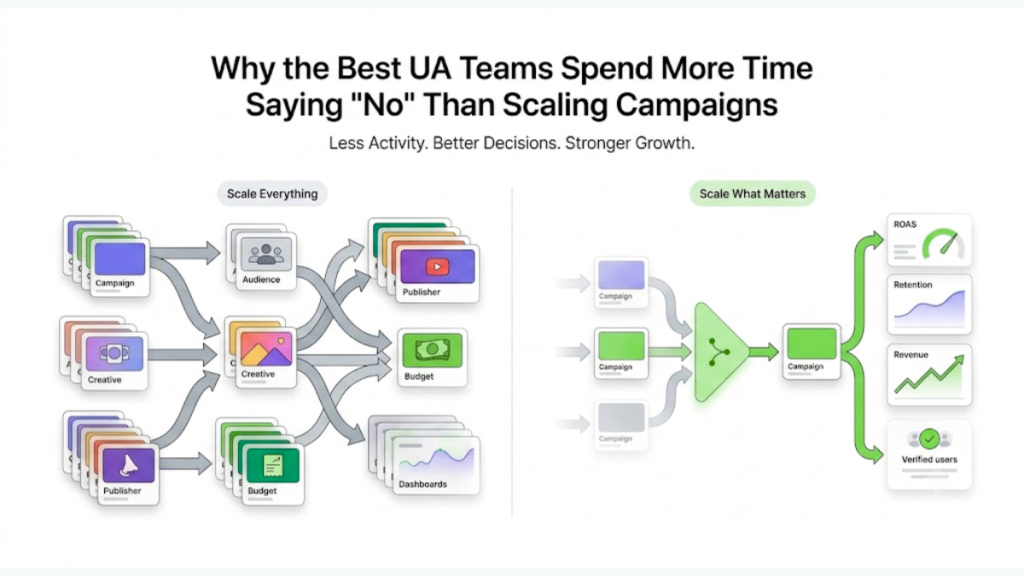
Why the Best UA Teams Spend More Time Saying “No” Than Scaling Campaigns

For years, User Acquisition revolved around one question: How fast can we scale? Bigger budgets. More geographies. More creatives. More installs. Growth meant doing more. But in 2026, the best UA teams are asking a different question:

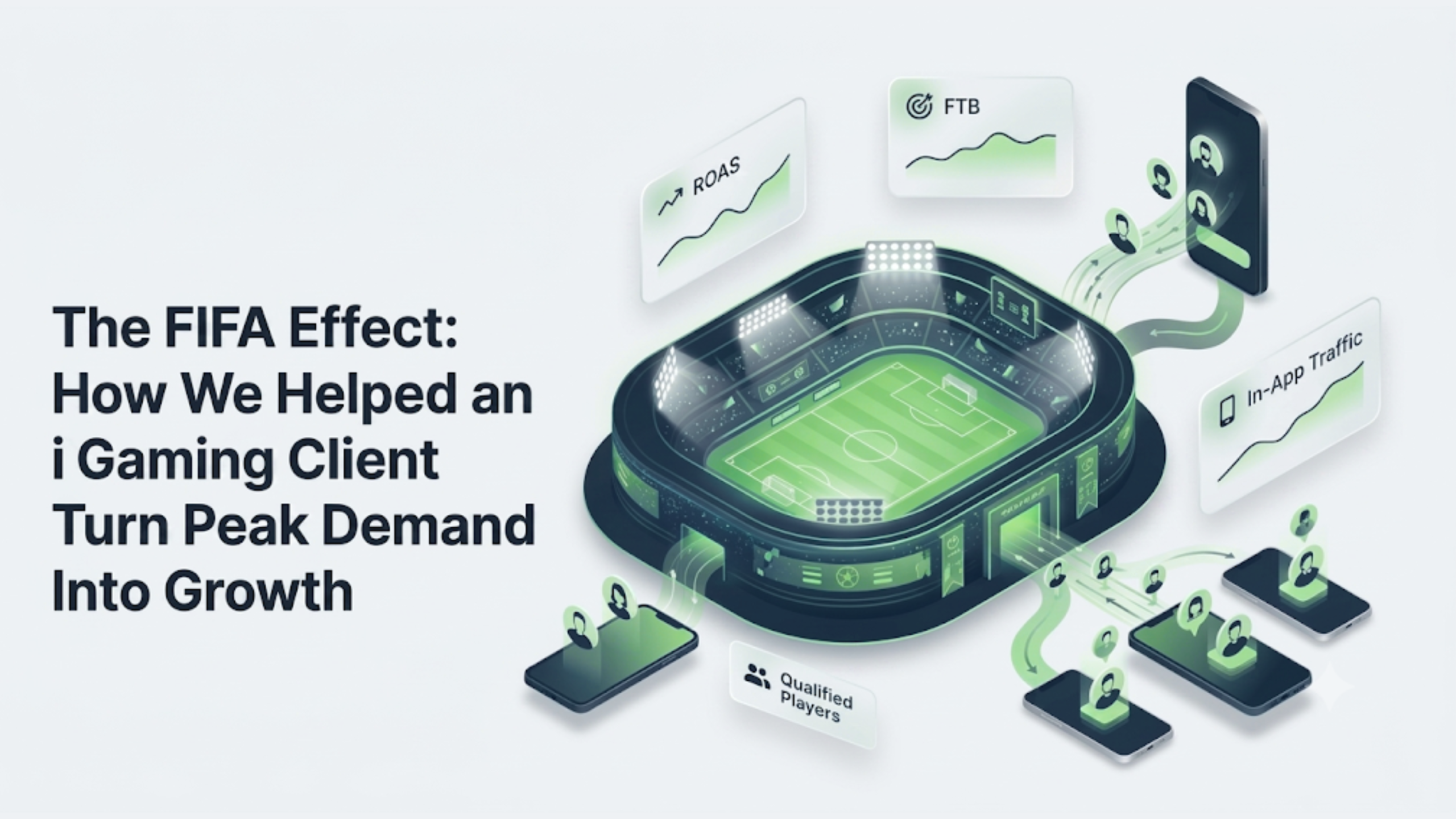
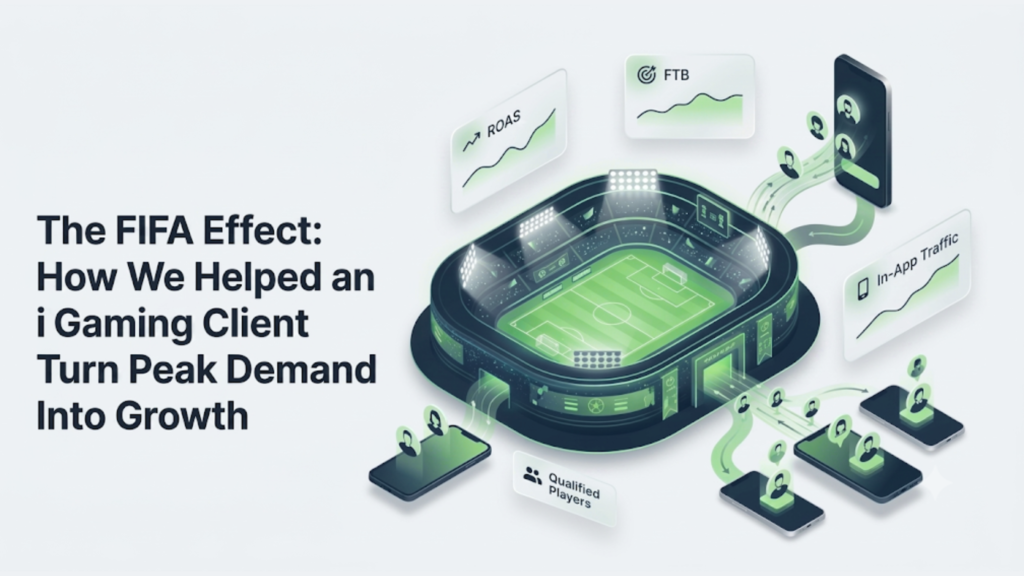
The FIFA Effect: How We Helped an iGaming Client Turn Peak Demand Into Growth

Every major tournament creates the same paradox for iGaming marketers.
APPSHEPHERD

Protect Every Install.

Always-on fraud protection designed to keep your traffic clean and attribution accurate.