



Incrementality vs Cannibalisation: Are Your UA Campaigns Really Driving Growth?

Incrementality vs Cannibalisation: Are Your UA Campaigns Really Driving Growth?

Because not every install is actually a win.

User Acquisition (UA) today is faster, smarter, and more automated than ever. Dashboards show installs, ROAS, CPA, and conversions in real time. But one question often goes unasked:

Is your growth truly new, or are you simply moving the same users from one channel to another?

This is where two concepts become critical:

  • Incrementality: Are your campaigns creating users who would not have come otherwise?
  • Cannibalisation: Are your campaigns taking credit for users who were already going to convert?

This is not just a technical or analytics concern. It directly affects your budget efficiency, scaling strategy, and long-term business growth.
1. What Is Incrementality?

Incrementality means the additional growth that exists only because a campaign was run.

If you turn a campaign off and your installs or revenue drop, that drop represents the true value of that campaign.

Example

You run a paid campaign for a fitness app.

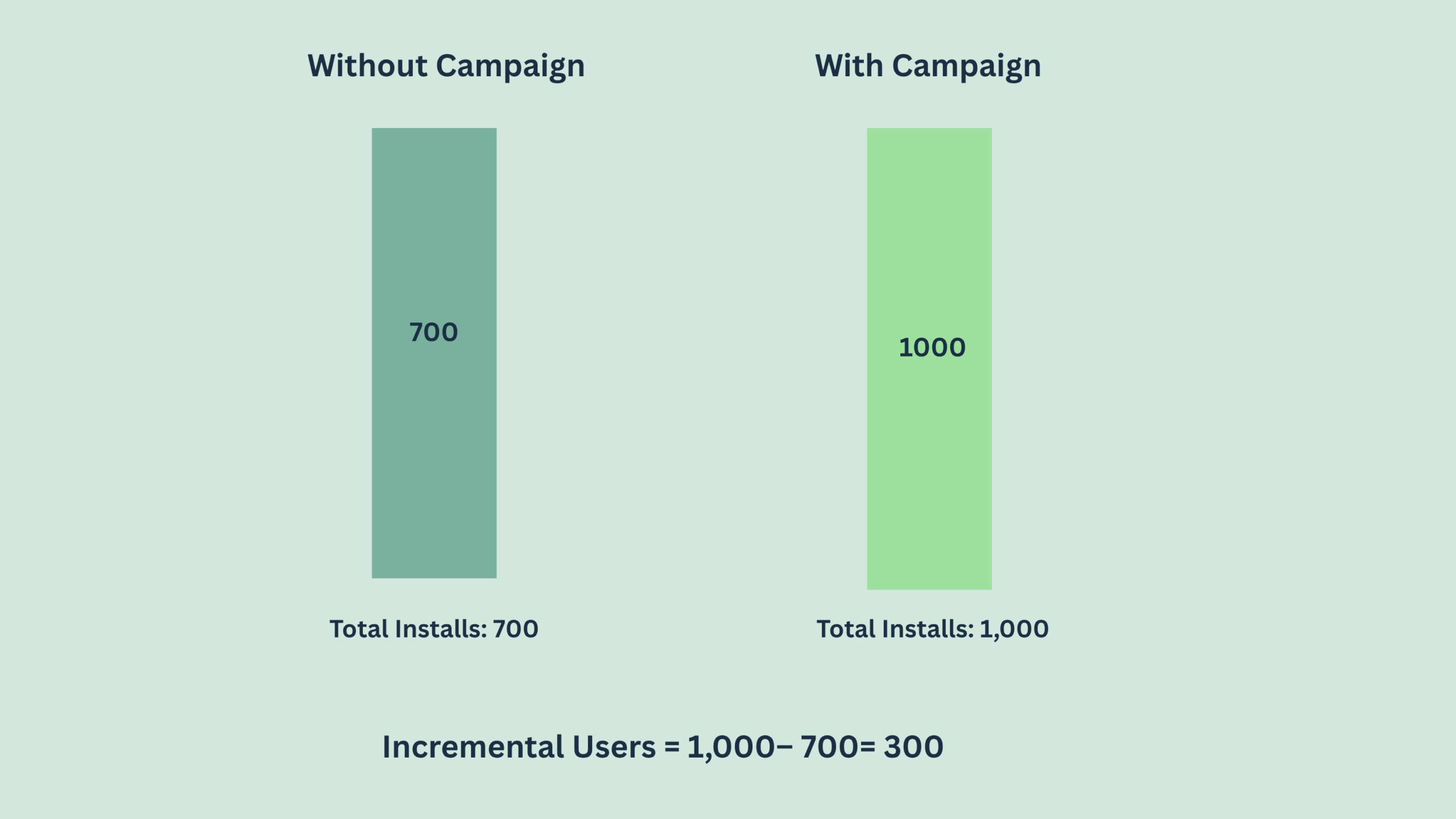
  • With ads: 1,000 installs per day
  • Without ads: 700 installs per day

Incremental installs = 300 per day

These 300 users are the real business impact of your campaign. They would not have come without paid marketing.

Everything beyond that is not growth—it is simply attribution.

Why Incrementality Matters

Why Incrementality Matters

Incrementality tells you:

  • Whether your budget is creating new demand
  • Or simply capturing demand that already existed


If a campaign does not create additional users, you are not scaling the business. You are only redistributing traffic across channels.

2. What Is Cannibalisation?

Cannibalisation occurs when a campaign claims users who would have converted through another channel anyway.

Instead of adding new users, the campaign simply takes credit for existing ones.

Common Scenarios
  • Paid search taking credit for users who would have clicked organic results
  • Retargeting ads converting users who were already ready to buy
  • Multiple platforms reporting conversions from the same user
Example

A user searches your brand name on Google and clicks your paid ad instead of your organic result.

You record:

  • One paid conversion
  • But zero new demand


This is cannibalisation. The user was already looking for you. The campaign did not create the intent—it only intercepted it.

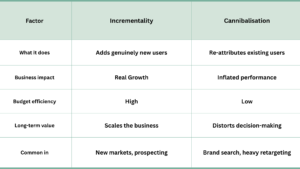
3. Incrementality vs Cannibalisation: The Real Difference

4. Why Most UA Campaigns Overestimate Performance

Most dashboards focus on:

  • Installs
  • CPA
  • ROAS
  • Conversion rate


What they rarely answer is: “Would this user have come even without this campaign?”

This leads to three major problems:

  1. Over-investing in low-impact channels that look efficient but add little new growth
  2. Under-investing in experiments that actually expand the market
  3. Scaling campaigns that improve reports, not the business


In short: Strong metrics do not always mean real growth.

5. Where Cannibalisation Commonly Happens

Brand Search Ads

You bid on your own brand name. These campaigns often show very low CPA, but many of these users were already searching for you. The campaign captures demand rather than creating it.

Retargeting and Re-engagement

You show ads to users who have already visited your site or app. Conversion rates are high, but incrementality is often low because many users were already close to converting.

Platform Overlap

You run similar campaigns on multiple platforms such as Meta, Google, and DSPs. Each platform reports conversions, but they may be claiming the same users.

Over-Optimised Lookalikes

You target audiences that are too similar to your existing users. Results may look strong initially, but you are not expanding into new user groups.

These campaigns often appear efficient but contribute little to long-term growth.

6. How to Measure Incrementality Without Overcomplicating


You do not need complex models. You need controlled testing.

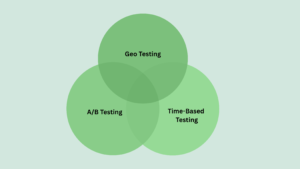
Method 1: Holdout or Geo Testing

Turn off campaigns in:

  • A city
  • A region
  • Or a defined user group


Compare performance between “ads on” and “ads off” segments.

Incrementality = Difference between the two.

Method 2: A/B Testing

Create two groups:

  • Group A: Exposed to campaigns
  • Group B: Not exposed


Measure installs, revenue, and retention over the same time period.

Method 3: Time-Based Testing

Pause a campaign for a short period.

  • If metrics fall sharply, the campaign is likely incremental
  • If metrics remain stable, the campaign is likely cannibalising


What disappears when ads stop is your true value.

7. A Practical Framework to Evaluate Campaigns

Use this classification for each major channel:

Incremental
  • Brings new users
  • Expands reach or enters new markets
  • Increases total business metrics, not just attributed results
Mixed
  • Delivers some new users
  • Cannibalises in certain segments
  • Requires optimisation rather than elimination
Cannibalising
  • Takes credit for organic or other paid traffic
  • Improves dashboards but not business KPIs
  • Should be restructured or deprioritised

8. How High-Growth Teams Think Differently

They do not optimise only for cheap installs. They optimise for net business growth.

They focus on:

  • Net new users
  • Market expansion
  • Long-term customer value
  • Cross-channel contribution


Their guiding question is: “Which campaigns actually grow the business?” Not: “Which campaigns look best in reports?”

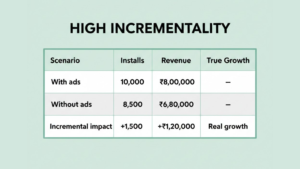
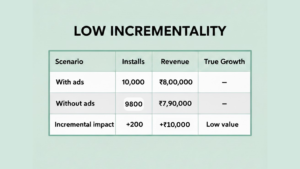
9. Incrementality in Action: A Simple Comparison


Both campaigns “perform.” Only one meaningfully grows the business.

10. How to Reduce Cannibalisation Without Hurting Performance

Separate Brand, Retargeting, and Prospecting

Do not judge growth campaigns by the same metrics as brand or retargeting.

Control Retargeting Frequency

Avoid repeatedly targeting users who are already engaged or close to conversion.

Invest in New Audiences

Prioritise:

  • New geographies
  • New interest clusters
  • Underserved user segments


Growth comes from expansion, not repetition.

Measure Business KPIs, Not Just Platform KPIs

Track:

  • Total installs
  • Net revenue
  • Retention
  • Repeat usage


Not just CPA or ROAS by channel.

11. Why Incrementality Is the Future of UA

With:

  • Privacy restrictions
  • Attribution limitations
  • Cookie deprecation
  • Platform bias

Incrementality is becoming the only reliable way to measure real impact.

The future of UA is not about: “Which channel looks best?” It is about: “Which channel creates growth that would not exist without it?”

12. Final Takeaway

Not every install means growth. Not every conversion is incremental. And not every high-performing campaign deserves a bigger budget.

What truly matters is not how good your dashboards look, but whether your campaigns are creating results that would not exist without them.

At its core, the difference is simple:

  • Incrementality shows the growth your business gains only because your campaigns are running.
  • Cannibalisation shows activity that looks successful but merely shifts credit from one channel to another.

If you focus only on surface metrics like CPA or ROAS, you risk scaling what looks efficient rather than what actually works.

The most important question in UA is therefore :

“Would this result exist if my campaign did not run?”

  • If the answer is yes, the campaign is likely cannibalising demand.
  • If the answer is no, the campaign is driving real, incremental growth.

Sustainable growth does not come from repeating the same audiences or intercepting users who were already ready to convert. It comes from expanding reach, unlocking new demand, and adding users who would not have arrived otherwise.

In today’s privacy-first, attribution-limited ecosystem, one principle stands above all others:

Only incremental growth is growth you can trust.

Related Blogs

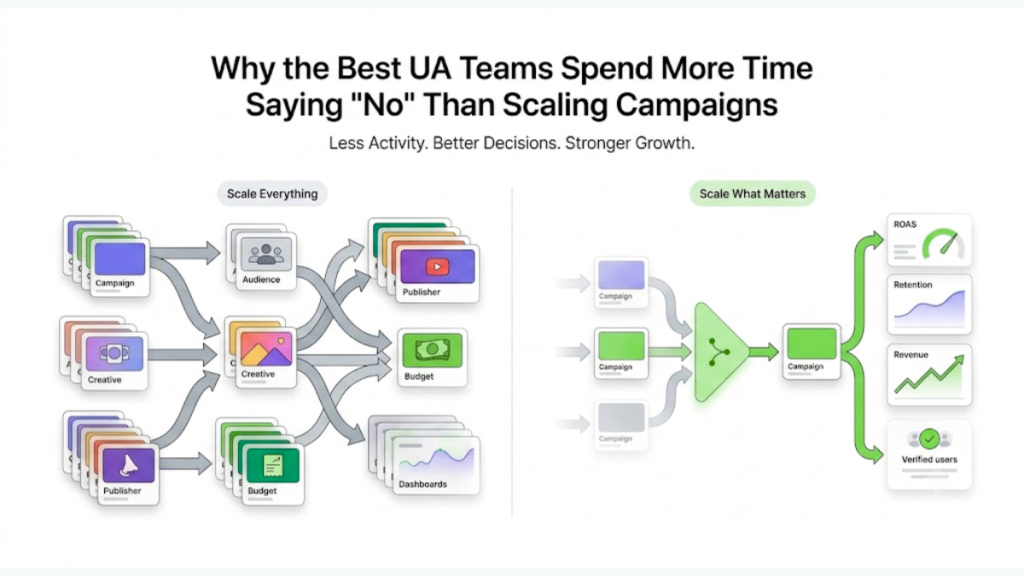
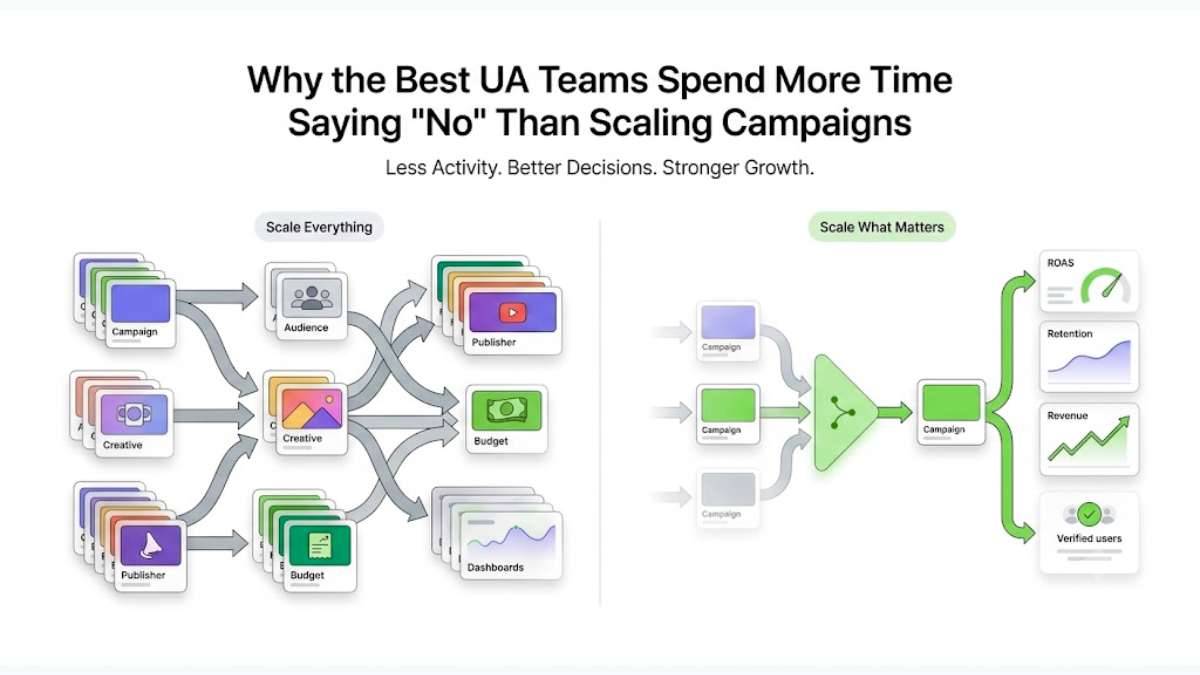
Why the Best UA Teams Spend More Time Saying “No” Than Scaling Campaigns

For years, User Acquisition revolved around one question: How fast can we scale? Bigger budgets. More geographies. More creatives. More installs. Growth meant doing more. But in 2026, the best UA teams are asking a different question:

The FIFA Effect: How We Helped an iGaming Client Turn Peak Demand Into Growth

Every major tournament creates the same paradox for iGaming marketers.

First-Party Data in UA — What It Actually Means Beyond the Buzzword

First-party data has become one of the biggest buzzwords in UA.
APPSHEPHERD

Protect Every Install.

Always-on fraud protection designed to keep your traffic clean and attribution accurate.